
The Truth About Mini Chainsaw Chain Guards
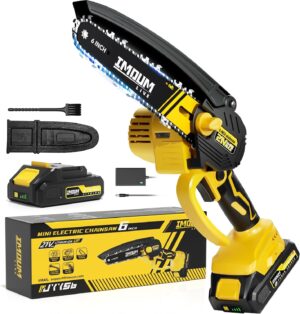
If you own a mini chainsaw, you have probably noticed the plastic guard sitting above the chain.
Some people assume it is just there for looks. Others think it makes the tool completely safe.
The truth is somewhere in the middle.
A chain guard (or anti-splash guard) does help make a mini chainsaw safer, but only if you understand what it actually does, and what it does not do.
What Is a Chain Guard?
A chain guard is the protective shield located above the cutting chain on most mini chainsaws.
Its main job is to help protect you from flying debris thrown out by the chain during cutting. A secondary function is to stop your hand and/or fingers being exposed to the chain.
On many larger chainsaws, the front guard also acts as a chain brake during kickback.
However, most mini chainsaws do not have a true chain brake system like full-size chainsaws do. Their guards are mainly designed as physical protection rather than an automatic safety device.
That means you should never assume the guard alone will stop an accident.
How Chain Guards Improve Safety
For beginner users, chain guards can make a real difference during everyday cutting tasks, especially when it comes to protection from flying debris.
As the chain spins at high speed, it can throw out small wood chips, bark, dust, sap, and tiny broken twigs directly toward your hands and body. When pruning shrubs or cutting dry branches, bits of debris can fly off unexpectedly and strike your fingers or knuckles.
The chain guard acts like a small shield that helps deflect some of this material away from your hand. While it will not block everything, it can reduce the amount of debris hitting you during normal cutting or pruning.
Chain guards also help by:
– Creating a protective barrier above the moving chain
– Reducing the chance of branches scraping or striking your fingers
– Offering some protection if the saw slips during light cutting
For homeowners who only use a mini chainsaw occasionally, this extra layer of protection can make the tool feel less intimidating to use.
What a Chain Guard Cannot Do
This is where many new users misunderstand the function of the chain guard.
A chain guard cannot:
– Stop the chain instantly
– Protect your other hand
– Replace proper handling
– Fix unsafe cutting techniques
That is why safe handling matters far more than relying on safety features alone.
Signs of a Poor or Damaged Guard
Not all mini chainsaw guards are built well.
Cheap models often use thin plastic that becomes loose or cracked over time.
Before using your saw, quickly inspect the guard for:
– Cracks or splits
– Loose mounting screws
– Excessive movement or wobbling
– Sharp damaged edges
If the guard feels loose, regardless of cause, stop using the saw until it is repaired or replaced.
A damaged guard gives users a false sense of security, and can actually increase the risk of injury.
Simple Ways to Stay Safer
The safest mini chainsaw users combine safety features with good habits.
So always remember to:
– Hold the saw firmly with both hands if possible
– Wear gloves and eye protection
– Keep the chain sharp
– Avoid cutting above shoulder height
– Never rush while cutting
– Stay alert for kickback risks near the bar tip
A sharp, properly maintained mini chainsaw is safer than a dull neglected one because it cuts smoothly without having to force the tool.
Final Thoughts
So, do chain guards really make mini chainsaws safer?
Yes, but only as part of an overall safe setup. They provide useful protection for beginners and help reduce certain everyday risks.
However, they are not magic safety devices that prevent all accidents.
Good technique, careful handling, and proper maintenance are still the most important parts of mini chainsaw safety.