
Best Chain Sharpening Angles for Mini Chainsaws Explained
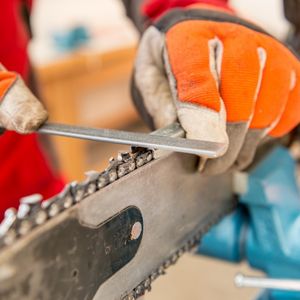
Chainsaw chain maintenance is a key aspect of chainsaw effectiveness and longevity
If your small chainsaw suddenly feels slow, cuts crooked, or throws out fine sawdust instead of wood chips, there is a good chance the chain needs sharpening.
For many new mini chainsaw owners, sharpening the chain sounds technical and intimidating.
But in reality, understanding the correct sharpening angle is one of the easiest ways to improve cutting performance and extend chain life.
The good news is that most small chainsaws and mini chainsaws use very similar sharpening angles.
So, once you understand the basics, maintaining a sharp chain becomes pretty simple.
Why Sharpening Angles Matter
A chainsaw tooth is designed to cut wood efficiently at a very specific angle.
If the angle is too steep or too shallow, the chain can:
– Cut slower than it should
– Pull to one side
– Create extra vibration
– Increase strain on the motor
– Wear out faster
Correct sharpening angles help the cutting tooth slice cleanly through wood instead of scraping or tearing it.
For small cordless chainsaws and mini pruning saws, this is especially important because they have less power than full-size professional chainsaws. A sharp chain with the correct angle thus allows the saw to work efficiently without overloading the motor or battery.
The Most Common Sharpening Angle for Mini Chainsaws
Most mini chainsaws use a 25° to 35° top plate filing angle, with 30° being the standard recommendation.
For the average homeowner using a 4-inch, 6-inch, or 8-inch mini chainsaw, a 30° angle is usually the safest and most effective choice.
This angle provides:
- Fast cutting speed
- Smooth cutting action
- Good control
- Balanced chain durability
Many sharpening guides and filing jigs are already marked for 30°, making it easier for beginners to sharpen consistently.
Understanding the Three Main Chain Angles
When sharpening a chainsaw chain, there are actually three important angles to consider.
1. Top Plate Angle
This is the angle most people refer to when sharpening.
It is viewed from above the chain and controls how aggressively the cutter bites into the wood.
Typical settings are:
25° for harder woods and smoother cuts
30° for general use
35° for faster cutting in softer wood
For mini chainsaws used around the garden, 30° works best in almost all situations.
2. Side Plate Angle
The side plate angle affects how the cutter edge slices downward into the wood.
Fortunately, you usually do not need to measure this manually. If you hold the round file correctly and follow the cutter shape, the side plate angle forms naturally.
3. File Angle (Tilt)
Some chains require a slight upward file tilt, often around 10°.
However, many mini chainsaw chains are designed to be sharpened with the file held level.
Always check your chain manufacturer’s instructions if possible.
How to Know the Correct Angle for Your Chain
The best sharpening angle can vary slightly depending on the chain type.
You can usually find the recommended angle:
– In the chainsaw manual
– On the chain packaging
– alternatively 0n the manufacturer’s website
– Or stamped onto some filing guides
Popular mini chainsaw brands often use low-profile chains that are optimized for a 30° filing angle.
If you cannot find the exact specification, sticking to 30° is normally a safe option for household use.
What Happens if the Angle Is Wrong?
New chainsaw owners often sharpen freehand without a guide, which can create uneven angles.
This can lead to problems such as:
If the Angle is Too Steep
If the angle becomes too aggressive:
– The chain grabs too hard
– Cutting becomes rough
– Teeth dull faster
– Kickback risk can increase
If the Angle is Too Shallow
If the angle is too flat then:
– Cutting becomes slow
– The chain produces fine dust instead of chips
– More pressure is needed while cutting
Uneven Angles
If one side of the chain is sharpened differently from the other, the saw may pull sideways during cuts.
This is one of the most common causes of crooked cutting in small chainsaws.
The Easiest Way to Maintain the Correct Angle
For beginners, the simplest solution is to use a filing guide.
These inexpensive tools help you:
- Maintain a consistent sharpening angle
- Keep all cutter teeth even
- Avoid over-filing
- Sharpen more accurately
A guide is especially helpful on mini chainsaws because the smaller teeth can be harder to sharpen consistently by eye alone.
How Often Should You Sharpen a Mini Chainsaw?
A mini chainsaw chain should usually be touched up:
- After several hours of cutting
- Whenever cutting performance drops
- After hitting dirt, stones, or metal
- If the saw begins producing fine dust
Light, regular sharpening is far better than waiting until the chain becomes completely dull.
Just a few strokes with the correct angle can restore cutting performance quickly.
Signs Your Chain Is Properly Sharpened
After sharpening, the chain should:
– Pull itself into the wood easily
– Produce larger wood chips when cutting
– Cut straight
– Require less pressure on the wood to cut
– Feel smooth while cutting
A properly sharpened mini chainsaw is safer, faster, and easier to control
In Summary
For most small chainsaws and mini chainsaws, a 30° sharpening angle provides the best balance of cutting speed, smoothness, and chain durability.
Learning to maintain this angle consistently can dramatically improve your saw’s performance and make cutting far less frustrating.
For homeowners and occasional users, sharpening does not need to be perfect.
What matters most is keeping the angles consistent across all cutter teeth and sharpening regularly before the chain becomes badly worn.
A sharp mini chainsaw is not only more efficient but also safer and much easier to use.