Chainsaw Features Are a Key Selling Point
Chainsaw listings are packed with features, specs, and buzzwords that are designed to impress potential buyers.
And if you are like me, all these options can become confusing when you are trying to decide which saw to buy.
In my opinion, the key is knowing which features actually improve safety, ease of use, and real-world performance, and which ones are mostly marketing fluff.
So let’s take a look at what truly matters when choosing a chainsaw for home use.
Bar Length
Many homeowners assume that bigger is better, but probably more important is that bar length should match your typical cutting tasks.
Here are some suggestions in that regard:
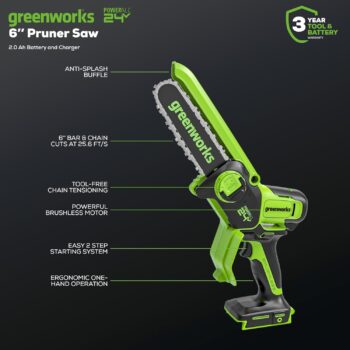
– 4 to 6 inch bars → use for light pruning and trimming
– 8 to 10 inch bars → thicker branches (up to 8 inches) and storm cleanup
– 12 to 14 inches → occasional firewood and fallen limbs
But do remember that longer bars add weight to the tool which can lead to fatigue and increase kickback risk.
So choosing the shortest bar that does the job makes the saw safer and easier to control.
Weight and Balance
When it comes to homeowners and occasional users, the weight of the chainsaw is more important than raw power for a number of reasons.
A lighter chainsaw:
– will reduce arm and shoulder strain
– enables you to have better control of the saw
– enables you to cut safely
Balance is just as important. A well-balanced saw feels lighter to use, even if the scale might say otherwise.
Chain Tensioning System
Although tool-free chain tensioners are often a prominent part of the sales blurb, they are, in fact, a very useful feature.
This is because they make it easy for homeowners to keep chains properly adjusted.
This in turn:
– improves cutting performance
– reduces the incidence of chain derailment
– increases overall safety
If a chainsaw makes tensioning difficult, casual users are more likely to ignore it. And that is never a good idea!
Automatic Chain Oiling
Automatic oilers are a blessing for part timers because by keeping the chain adequately oiled at all times, they:
– reduce chain wear
– prevent overheating
– simplify maintenance
Manually oiled systems rely on user consistency, which isn’t ideal for part time users who are more likely to forget this important aspect of chainsaw usage.
Safety Features That Actually Help
The smaller mini chainsaws may well not have all, or in fact any, of these safety features.
But they should feature on the bigger and more powerful chainsaws:
– chain brake
– hand guard
– low-kickback chain
These features help protect all chainsaw users, irrespective of their level of competence
Power Source (Corded, Cordless, or Gas)
Power choice affects convenience more than cutting ability for homeowners:
– Cordless: best overall balance of safety and portability
– Corded: fine for small yards and predictable cuts
– Gas: usually unnecessary unless you are consistently cutting large volumes of big wood. Most homeowners don’t need the starting issues, noise, weight, or maintenance of gas chainsaws.
Features That Matter Less Than You Think
Some commonly advertised features have limited value for casual users:
– ultra-high chain speed
– super sized motors
– professional-grade magnesium housings
These options sound impressive, and no doubt up the price, but are certainly not a necessity for the type of common garden work done by homeowners.
The Bottom Line
For homeowners, the best chainsaw isn’t usually the most powerful on offer.
Rather it’s the one that:
– feels comfortable
– matches your cutting tasks
– encourages and provides safe, controlled use
If you focus your thoughts on bar length, chainsaw weight, essential safety features, and ease of maintenance, then you’ll get far more real-world value than chasing professional-grade specs.