
Mini Chainsaw Safety Tips For New Users
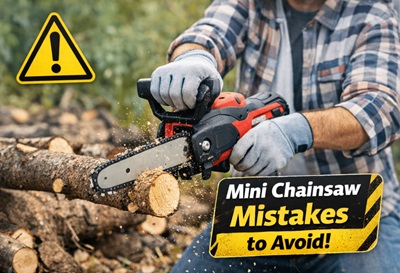
Mini chainsaws are an excellent tool for homeowners, gardeners, DIY enthusiasts and campers.
They are ideal for for those who occasionally need to cut small branches, logs, or planks.
Also, they are lightweight, portable, and easy to handle compared to full-sized chainsaws.
However, new users often make mistakes that can lead to accidents, poor results, or unnecessary wear and tear of the chain and motor.
In this article, we’ll cover the most common mini chainsaw mistakes and show how to avoid them, thus ensuring a safer and more effective cutting experience.
1. Skipping Safety Gear
One of the most frequent errors new users make is not wearing proper safety equipment.
Even though mini chainsaws are less powerful than professional models, they are still sharp, fast, and capable of causing serious injuries.
Essential safety gear includes:
– Safety goggles or glasses to protect your eyes from sawdust and flying wood chips.
– Cut-resistant gloves to reduce the risk of hand injuries.
– Ear protection, especially if you’re using a gas-powered mini chainsaw.
– Long pants and closed-toe shoes for added protection.
– Skipping safety gear is never worth it, even for small, quick jobs around the garden.
2. Improper Grip and Stance
Another common mistake is using the chainsaw with the wrong grip or stance. Beginners often hold the tool too loosely or bend over awkwardly while cutting.
Tips for proper handling of your mini saw:
– Hold the chainsaw firmly. Most mini chainsaws are designed for one handed use although some might have the option of a second handle. If that is the case, use both hands to operate the saw.
– Keep your arm(s) slightly bent, not locked.
– Stand with your feet shoulder-width apart for better balance.
– Avoid cutting above shoulder height or reaching too far out from your body. Both these actions will reduce the control you have over the tool and increases the risk of kickback.
A steady grip and balanced stance are key to safe operation and smoother cuts.
3. Cutting the Wrong Material
Mini chainsaws are designed for light-duty tasks like cutting small branches or logs. Using them on large, hard timber or frozen wood can strain the motor and dull the chain quickly.
Avoid this mistake by:
– Checking the recommended cutting capacity in your chainsaw’s manual. Be aware however that some manufacturers will overstate their saws’ capabilities. Follow this common rule and use common sense.
– Let the saw do the work. If you are having to force the cut then you need to reassess the suitability of the saw for the job..
Remember. Using the right tool for the right material prolongs the life of your chainsaw and ensures cleaner cuts.
4. Neglecting Chain Maintenance
A dull or improperly tensioned chain is a leading cause of poor cutting performance and accidents. New users often forget to check the chain before each use.
Chain maintenance tips:
– Ensure the chain is correctly tensioned—not too loose or tight.
– Keep the chain sharp. If cutting feels difficult or uneven, it’s time to sharpen the chain or replace it.
– Lubricate the chain regularly according to the manufacturer’s instructions.
A well-maintained chain reduces the risk of kickback and improves cutting efficiency.
5. Ignoring Kickback Risks
Kickback occurs when the tip of the chainsaw hits an object or gets pinched in wood, causing the saw to jerk back toward the user. This is one of the most dangerous mistakes for beginners.
How to minimize kickback:
– Avoid cutting with the tip of the blade.
– Keep a firm, two-handed grip at all times.
– Never cut with the chainsaw above shoulder height.
– Use a saw with a low-kickback chain if possible (not common in mini chainsaws)
Understanding kickback and how to prevent it can save you from serious injuries.
6. Rushing the Job
Many new users try to cut too quickly, thinking speed is efficiency.
In reality, rushing increases the chance of mistakes, uneven cuts, and accidents.
Best practices:
– Let the chainsaw do the work—apply light, steady pressure.
– Take breaks if your arms get tired.
– Focus on precision rather than speed.
Slow and steady cutting is safer and produces cleaner results.
7. Improper Storage and Charging
Finally, beginners often overlook the importance of proper storage and charging, especially for battery-powered mini chainsaws.
Tips for care:
– Charge the battery fully before use and avoid leaving it depleted for long periods.
– Store the chainsaw in a dry place, away from children.
– Keep the chain covered with a protective sheath when not in use.
Proper storage ensures your chainsaw is ready for action and lasts for many seasons.
Conclusion
Mini chainsaws are an excellent addition to any casual user’s toolkit, but they require attention and care.
Avoiding these common mistakes: not wearing safety gear; using the wrong grip; cutting inappropriate materials; neglecting chain maintenance; ignoring kickback risks; rushing, and improper storage.
This will make working with your saw safer, easier, and more enjoyable.
By following these simple tips, even occasional users can get clean, precise cuts without unnecessary risk.
Remember that safety and preparation are always more important than speed or convenience.